
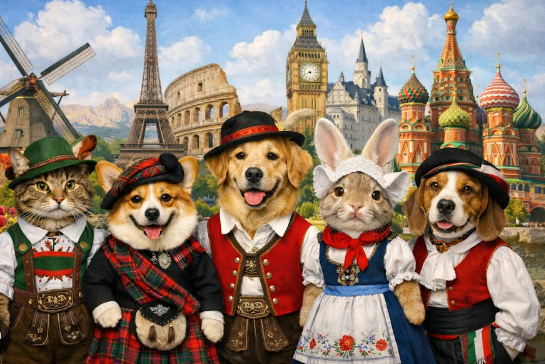
Dog culture in Europe is diverse, shaped by national traditions, urban lifestyles, animal welfare standards, and the close bond between people and their pets. Across the continent, dogs are widely viewed as companions, family members, and active participants in daily life.
1. National Variations in Dog Care
Dog care practices vary across Europe. In France, dogs are often welcomed in cafés and public spaces, reflecting a relaxed pet-friendly culture. In Germany, dogs are commonly included in family activities, public transport, parks, and shops, supported by strong expectations around training and responsible ownership.
Scandinavian countries often emphasize welfare, socialization, and regulation, encouraging owners to provide structured care and humane treatment.
- Research local dog ownership laws
- Visit dog-friendly spaces for socialization
- Learn breed-specific care needs
- Connect with local training communities
2. Training Techniques Across Cultures
Training approaches differ across Europe, but positive reinforcement has become increasingly popular. In the UK, clicker training and reward-based methods are widely used. In Italy and other countries, modern reward-based approaches are growing alongside older traditional methods.
Urban areas across Eastern Europe are also seeing more interest in behavior classes, socialization programs, and professional dog training.
- Use positive reinforcement consistently
- Research local training schools
- Attend canine behavior workshops
- Practice patience and routine
3. Celebrating Dogs in Festivals and Events
Europe hosts many dog-centered events, from major shows like Crufts in the UK to local festivals, adoption events, and breed gatherings. These events celebrate canine beauty, skill, companionship, and welfare.
They also provide educational opportunities, helping owners learn about grooming, health, training, and responsible pet care.
- Attend local dog festivals or shows
- Join competitions or demonstrations
- Support welfare-focused events
- Learn from workshops and experts
4. The Role of Dogs in Daily Life
Dogs are deeply woven into everyday life across many European cities and rural areas. Owners often bring them on walks, vacations, social outings, and family activities. Dog-friendly beaches, cafés, parks, and hotels make this lifestyle easier.
Dogs also play important therapeutic roles, supporting emotional well-being in homes, schools, hospitals, and care settings.
- Include dogs in safe social activities
- Maintain daily walking routines
- Explore pet-friendly travel options
- Consider therapy training where appropriate
5. Health and Wellness Practices for Dogs
Health and wellness are major parts of European dog culture. Routine veterinary care, vaccinations, parasite prevention, nutrition, and dental care are widely emphasized.
In some countries, holistic care such as massage, physiotherapy, and acupuncture is also gaining attention, especially for older dogs or those with mobility issues.
- Schedule regular veterinary visits
- Follow vaccination and parasite prevention guidance
- Choose a balanced diet suited to your dog
- Research safe complementary therapies
Dog culture in Europe reflects a strong relationship between companionship, public responsibility, and animal welfare. By learning from different European practices, owners can improve their dogs’ quality of life and deepen the human-canine bond.
In some European parks, plazas, or historic neighborhoods, a dog statue can serve as a charming symbol of this connection, honoring the loyalty, presence, and cultural importance of dogs in everyday life.