
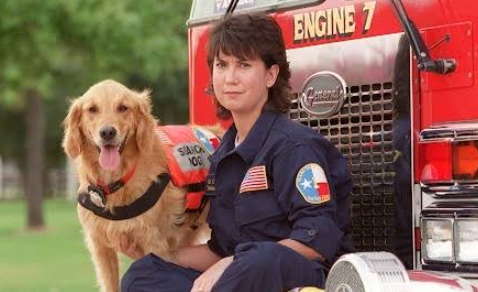
In the world of canine heroes, few stories resonate as deeply as that of Bretagne, a brave search-and-rescue dog, and her loyal handler, Denise Corliss. Their bond, forged through trials and triumphs, not only highlights the special relationship between humans and dogs but also exemplifies the incredible contributions animals can make during times of crisis.
1. The Early Days of Bretagne and Denise
Bretagne, a golden retriever, joined the Corliss family at the tender age of 8 weeks. Denise, a seasoned firefighter, was intrigued by the potential of this bright-eyed puppy. They began training together almost immediately, participating in obedience classes and agility training, which laid the foundation for Bretagne’s future as a search-and-rescue dog. Bretagne’s spirited personality and eagerness to work made her a perfect candidate for the rigorous training ahead.
Their journey took a significant turn when Denise introduced Bretagne to the world of search-and-rescue operations. Under the guidance of experienced trainers, Bretagne learned how to locate missing persons in various scenarios, including urban disasters and wilderness searches. This training was not just physically demanding, but also required Bretagne to develop her problem-solving skills, all while working closely with Denise to establish mutual trust and understanding.
-
- Start with basic obedience training to establish a solid foundation.
-
- Engage in regular play sessions to build confidence and motivation.
-
- Expose your dog to various environments to enhance adaptability.
-
- Utilize positive reinforcement techniques to encourage learning.
-
- Participate in agility courses to improve physical fitness and agility.
2. The Call to Action: 9/11 and Beyond
The true test of Bretagne’s skills came during the aftermath of the 9/11 terrorist attacks. Denise and Bretagne were deployed as part of the Urban Search and Rescue Team to assist in the grim task of finding survivors at Ground Zero. As they worked through the debris, Bretagne used her keen sense of smell and remarkable determination to identify where individuals might be trapped. Their presence provided not only practical help but emotional support to those involved in the rescue efforts.
In the weeks that followed, Bretagne participated in rescue operations and recovery efforts. The heart-wrenching conditions of Ground Zero took a toll on both the dogs and their handlers, but Bretagne’s upbeat spirit helped motivate others around her. The bond between Denise and Bretagne deepened as they navigated the emotional landscape of loss, hope, and perseverance. Their collective efforts became a symbol of resilience for many and showcased the unique capabilities of trained service dogs.
-
- Understand the importance of building emotional intelligence in pets.
-
- Ensure your dog is physically prepared for demanding tasks.
-
- Create a support network with other handlers and trainers.
-
- Engage in regular training to maintain and enhance skills.
-
- Celebrate small victories together to foster teamwork and morale.
3. Life After the Rescue Missions
After serving in the rescue missions, Bretagne and Denise returned home to everyday life. While Bretagne had garnered national attention and accolades for her brave contributions, she remained a beloved family pet first and foremost. Eventually, Denise decided to retire Bretagne from active duty, knowing that the emotional toll and physical demands of search-and-rescue work required a gentler pace of life. This transition was not just a change in routine but a new chapter for both of them.
Denise took Bretagne to schools, community gatherings, and even therapy sessions where they shared their story of bravery and resilience. Their journey served to inspire others about the incredible roles that dogs can play in society, especially in critical situations. Being a public advocate for therapy and service dogs allowed Denise and Bretagne to continue making a positive impact in their community, showing the world that the bond between handler and dog can transcend any obstacle.
-
- Consider therapy or emotional support dog training for retirement stage.
-
- Stay active in the community to continue advocacy work.
-
- Balance working and personal time to avoid burnout.
-
- Participate in events that celebrate service animals.
-
- Provide regular check-ups to maintain your dog’s health and wellbeing.
Bretagne’s legacy extends beyond her time in the field; she also became an ambassador for dogs that serve in various capacities, enlightening the public about their contributions and the training they undergo. As she aged, her story became a poignant reminder of the incredible bond between humans and animals, a partnership rooted in trust, dedication, and love.
In conclusion, Bretagne and Denise’s journey reminds us of the wonderful ways our dogs can change lives. Their story encourages us to acknowledge the importance of training, working closely with our pets, and honoring the silent sacrifices made by service animals. Consider supporting or volunteering in organizations that promote the welfare of service dogs; together, we can make a difference!