
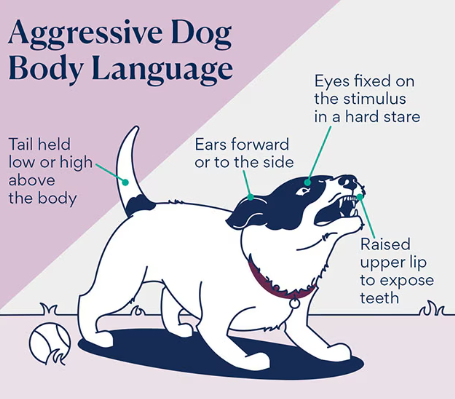
Understanding your dog’s body language is essential for building trust, preventing misunderstandings, and strengthening your relationship. Dogs communicate continuously through subtle physical cues, and learning to read them allows you to respond in ways that support their emotional well-being. Think of it as interpreting a living, moving “dog sculpture” of signals—each posture and motion telling a story.
1. Tail Position and Movement
A dog’s tail is one of the most expressive indicators of emotion, but it’s not as simple as “wagging = happy.”
- A high, fast wag typically signals excitement or confidence.
- A low, slow wag often reflects uncertainty or submission.
- A stiff, horizontal tail, especially with slow wagging, can indicate caution or a warning.
Always interpret tail signals alongside the situation—context matters. A wag in a familiar environment may mean joy, while the same wag around strangers could signal tension.
2. Ear Position and Movement
Ears act like directional antennas for emotion and attention.
- Erect or forward-facing ears suggest curiosity or alertness.
- Ears pinned back usually indicate fear, stress, or submission.
- Relaxed, neutral ears signal comfort and ease.
Breed differences matter here—dogs with floppy ears may show subtler changes, so observe baseline behavior to detect shifts.
3. Facial Expressions and Eye Contact
Your dog’s face provides nuanced emotional cues.
- Soft, relaxed eyes indicate trust and calmness.
- Hard staring can signal discomfort, tension, or potential aggression.
- A slightly open, relaxed mouth suggests a content dog.
- A tight mouth, lip licking, or yawning may indicate stress.
Eye contact is especially important—prolonged staring can feel threatening to dogs, so it’s best to respond gently and give space when needed.
4. Overall Body Posture
The body ties everything together into a full emotional picture.
- A loose, wiggly posture signals relaxation and friendliness.
- A stiff body, raised hackles, or lowered head often indicates fear or defensiveness.
- Approach behavior matters: confident dogs move fluidly, while hesitant dogs may move slowly or avoid eye contact.
Environmental context plays a major role—new places or unfamiliar people can temporarily alter posture.
5. Vocalizations and Accompanying Signals
Sounds only make sense when paired with body language.
- High-pitched barking often reflects excitement or playfulness.
- Deep growling serves as a warning—something is wrong.
- Whining can signal anxiety, discomfort, or a need for attention.
Always consider tone, volume, and posture together. A jumping, wagging dog barking loudly is very different from a stiff dog barking in a low tone.
Final Thought
Reading your dog’s body language is a skill that improves with observation and consistency. By tuning into these signals, you’re not just reacting—you’re communicating. Over time, this awareness builds a relationship grounded in trust, safety, and mutual understanding.